Airline Economics
Commercial Aviation & Fleet Economics
An airline is, at its core, a balance sheet with wings. Understanding how fleets are financed explains almost everything about how carriers behave.
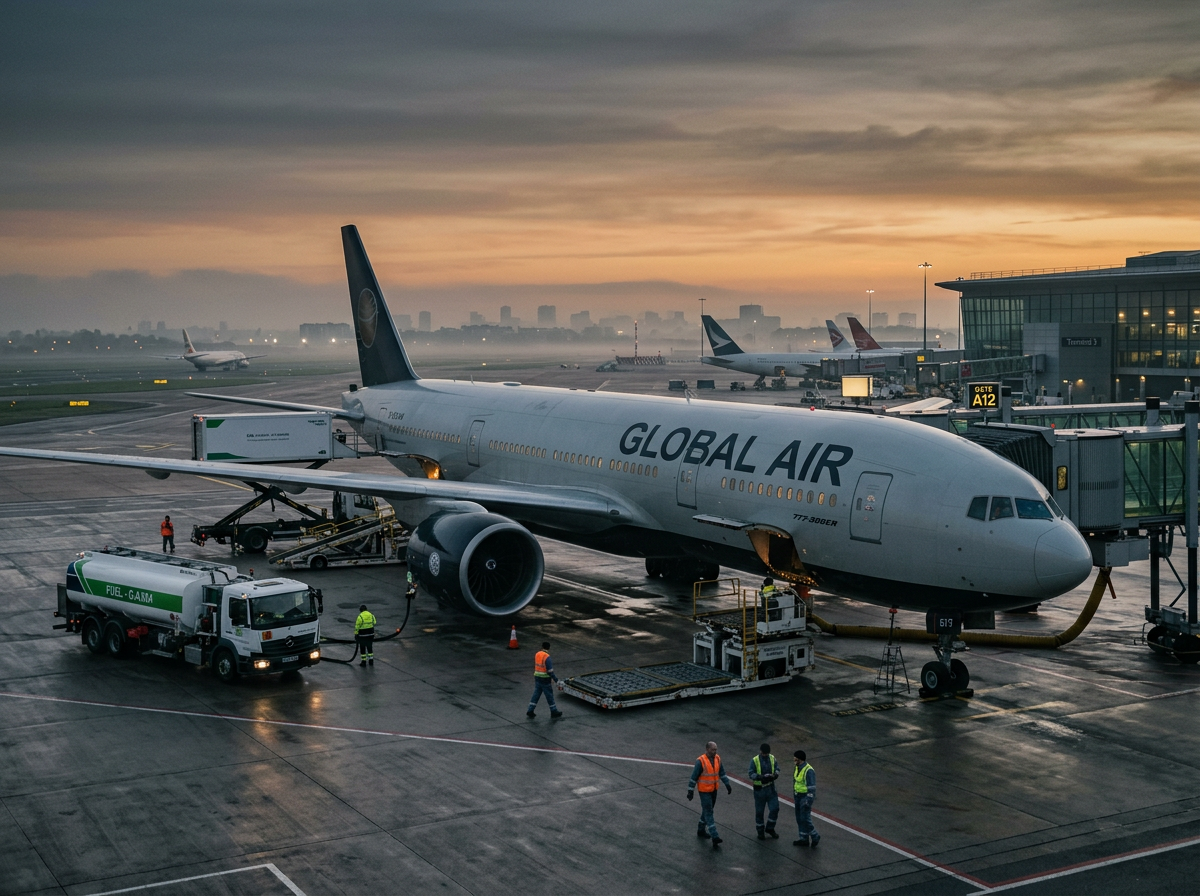
Every commercial airline lives inside a paradox. It sells a perishable product with razor-thin margins while operating one of the most capital-intensive asset bases in the global economy. A single narrowbody aircraft can represent fifty million dollars of committed capital, and a fleet renewal program can commit a carrier to billions of dollars of spending a decade before the first delivery lands.
That mismatch between short-cycle revenue and long-cycle capital is the reason aviation finance exists as its own discipline. Ticket prices move week to week. Aircraft order books move decade to decade. Bridging that gap is the entire job.
The three levers of fleet economics
When analysts model an airline, most of the argument eventually collapses into three variables: what the aircraft costs to own, what it costs to fly, and how reliably it can be filled. Everything else is commentary.
- Ownership cost — the blended effect of purchase price, financing structure, residual value assumptions, and depreciation schedule.
- Operating cost — fuel burn per seat, maintenance reserves, crew ratios, and the turnaround efficiency the airframe allows.
- Revenue quality — load factor, yield per available seat mile, and the network position the aircraft unlocks.
A newer aircraft usually wins on operating cost and loses on ownership cost. An older aircraft flips that equation. The interesting analytical work happens where those two curves cross, because that crossing point moves with fuel prices, interest rates, and secondary market demand.
Capital structure as strategy
Carriers rarely buy aircraft outright. They mix operating leases, finance leases, enhanced equipment trust certificates, sale-leaseback transactions, and export credit support into a structure designed for flexibility as much as cost. A fleet that is heavily leased can shrink quickly in a downturn. A fleet that is heavily owned captures residual value in an upcycle.
Fleet strategy is not a procurement decision. It is a statement about how much volatility a carrier believes it will have to survive.
This is why two airlines flying identical aircraft on identical routes can post radically different results. The metal is the same. The capital behind the metal is not.
Reading the cycle
Aviation is cyclical in a way few industries are. Demand shocks arrive without warning, but capacity takes years to adjust because aircraft cannot be un-ordered cheaply. The result is a persistent boom-and-bust rhythm where the winners are usually the carriers that entered the downturn with liquidity and unencumbered assets rather than the ones with the newest fleet.
The lesson for anyone studying this market is simple. Track the balance sheet before the route map. The route map tells you what an airline wants to do. The balance sheet tells you what it will actually be able to do.